Don’t underestimate the importance of local SEO. It has become a crucial part of marketing for small businesses, especially as competition continues to grow.
You might be wondering how you can actually succeed with local SEO, and more importantly, how to stand out when everyone else is starting to invest in it too.
That’s where strategy comes in.
More small businesses are recognising just how powerful local SEO can be. It drives strong search visibility, helps you connect with customers in your area, and puts your business in front of people who are actively looking for what you offer.
At the same time, Google and other search engines are constantly refining how they deliver local results. Their goal is simple. Provide users with the most accurate, relevant, and nearby information possible.
Because of this, ranking well in local search results is incredibly valuable. But it does not happen by accident. It requires a considered, consistent approach.
Today, we are breaking down some of the key factors you need to focus on if you want to improve your local SEO rankings.
Get comfortable, grab a snack, and let’s get into it.
What is local SEO?
In simple terms, local SEO is focused on increasing your visibility in local search results, so customers near your business can find your services first.
By prioritising local SEO, you make sure your business shows up for the people who are most likely to convert. The ones searching nearby, ready to take action.
Use Google My Business
One of the simplest, yet most important, ranking factors for local SEO is having your Google My Business profile properly set up and maintained.
Google My Business is a free tool that helps display local businesses in Google Search and Google Maps. When set up correctly, it ensures your business is visible to nearby customers and recognised by Google as a legitimate local entity.
Because Google My Business listings often appear before standard website results, it is essential that your profile is claimed, verified, and actively managed. This includes accurate business details, up to date contact information, and correct location data.
Google uses factors such as proximity, address, and business information to determine which listings appear in local results. When combined with a solid local SEO strategy, an optimised Google My Business profile can significantly improve your local visibility.
On-Page Signals
There are several on page signals that Google considers when ranking websites locally.
Relevant keywords play a major role. Search engines look for signals that clearly indicate where your business operates and who it serves. Using location specific keywords helps Google understand where your site belongs geographically.
Consistency is also critical. Including your business name, address, and phone number across key pages of your website helps Google confirm proximity and legitimacy. These details support stronger local rankings and improve trust signals.
Online Reviews
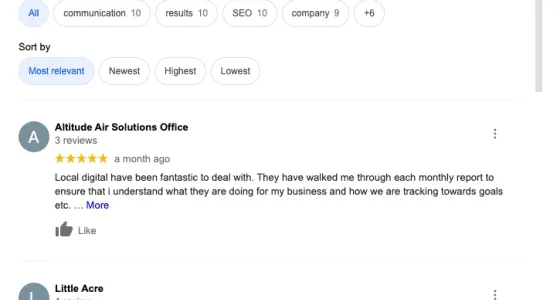
More often than not, customers read reviews before deciding whether to engage with a business.
Positive reviews build trust, credibility, and confidence, but they also play a direct role in local SEO performance. Google considers the number, quality, frequency, and diversity of reviews when ranking local businesses.
Regularly receiving positive feedback signals that customers are happy with your services, which can lead to improved local rankings. Encourage satisfied customers to leave reviews on platforms such as Google, Yelp, and other relevant review sites to strengthen both your reputation and your local SEO presence.
Backlink Profile
Backlinks play a major role in building authority for local businesses. Because of this, local SEO campaigns should focus on earning links from websites that are relevant, local, and trustworthy.
Building a strong backlink profile is not easy, but it is important to remember that quality always outweighs quantity. A handful of strong, relevant links will do far more for your rankings than dozens of low quality ones.
Some good places to start with local link building include:
- Local news and media publications
- Industry specific websites and blogs
- Reputable local business directories
- Local event pages, sponsorships, and community blogs
Backlinks from these types of sources help signal to Google that your business is legitimate, established, and relevant within its local area. This increases the likelihood of your business being prioritised in local search results.
Local SEO ranking factors related to backlinks also take into account the number of unique domains linking to your site. Earning links from a diverse range of relevant local sources can therefore further strengthen your local visibility.
Online Citations
Back in the day, businesses relied on the Yellow Pages. Today, online directories and citations play that role.
Online citations help search engines gather consistent information about businesses across the web, while also providing opportunities to earn local backlinks. Many users still rely on directories to find services, locations, and contact details, which makes citations an important part of any local SEO strategy.
Consistency is critical. Your business name, phone number, and address should be identical across every directory and listing. When this information matches everywhere it appears, it reinforces trust for both users and search engines.
Accurate and consistent citations help validate your business details, improve local visibility, and strengthen your overall local SEO performance.
Local Content
Publishing content that is relevant to your local area and surrounding community is another key factor in local SEO success.
Users enjoy engaging with businesses that feel connected to their community. Search engines also prioritise content that delivers real value, which is why local content plays such an important role in local search rankings.
Local content can take many forms, including:
- News updates
- Blog posts
- Articles
- Videos
- Visual content such as graphics
By naturally incorporating location based keywords and phrases into your content, you make it easier for nearby customers to find your business. Over time, this helps improve local visibility, engagement, and trust within your target area.
You’re a local whiz!
By understanding the factors that influence local SEO rankings, you can start building a local SEO strategy that works alongside your broader SEO efforts.
When you look at the ranking factors outlined above, it becomes clear that local SEO is not a quick win. It requires time, consistency, and ongoing effort to deliver sustainable, long term results.
Taking a well rounded, strategic approach to SEO is one of the most effective ways to make sure your local presence continues to grow.
If you’re still unsure where to start, we’ve got you covered. Get a free proposal with Local Digital and let our team of SEO experts put in the hard yards for you.