
Everybody loves a sugar coat. Sometimes, it’s a lot easier to digest information that isn’t ideal with a layer of sweet on top.
At Local Digital, we don’t like sugarcoating.
We tell it how it is, and SEO is a perfect example of that.
We would love to tell you that you can pay one upfront fee and have all your SEO problems magically disappear. The reality is that SEO simply does not work like that.
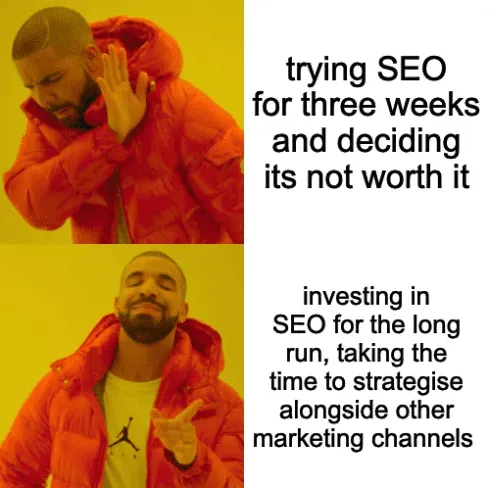
SEO requires ongoing investment to deliver results you are genuinely happy with. It is a long term strategy, not a one off fix.
Today, we are breaking down why SEO is a monthly investment, why that matters, and how this approach ultimately delivers the strongest results for your business.
Strap in. It is time for takeoff.
What is SEO?
Before we dive into why SEO should be a monthly investment, let’s take a step back and talk about what SEO actually is.
Search engine optimisation is a digital marketing strategy focused on improving your website’s visibility, particularly when it comes to ranking higher on search engine results pages (SERPs).
By applying the right strategies and tactics, you can optimise your website for search engines like Google, helping your business appear more prominently when potential customers are actively searching for your products or services. Higher rankings lead to increased visibility, which ultimately means more qualified traffic to your site.
Search engines consider a huge number of factors when deciding which pages deserve to rank. Google alone uses more than 200 ranking factors to determine search results.
Some of the most common SEO strategies include:
- Keyword research
- Creating SEO friendly content
- Optimising existing content
- Improving website design and overall user experience
- Link building
- Analysing search intent and customer queries
One of the biggest advantages of SEO is that consistent investment leads to ongoing results. Unlike short term tactics, SEO continues to deliver value over time.
By committing to SEO, your business can steadily expand its reach, attract the right audience, and drive sustainable growth in both sales and revenue.
Why do I need to commit to SEO long-term?
SEO will not drive traffic, sales, or leads overnight.
For most businesses, it takes at least three to six months before meaningful results start to appear. That is why SEO is a long term commitment rather than a quick fix.
You need to begin optimising your website and continue refining it even when results are not immediate. Consistency is key, especially in the early stages when search engines are still assessing your site.
There are several key reasons why SEO takes time to gain momentum, and understanding these helps set realistic expectations from the outset.
It takes time to set SEO up
There’s a lot involved when it comes to SEO.
You need to create content, optimise it, publish it on your website, troubleshoot issues, and continually refine what’s already there. On top of that, SEO doesn’t exist in isolation. It works best when it’s supported by other areas of digital marketing.
Some of the most common strategies that work alongside SEO include:
- Content marketing
- Google Ads
- Facebook advertising
- Web design
- User experience design
When all of these are aligned, they contribute to a stronger, more effective SEO strategy overall. An experienced SEO agency can bring all of this together in the right way, but even with the right expertise, it still takes time to do it properly.
Google is slow
Google might return search results in a split second, but discovering and indexing new websites is a much slower process. After all, Google’s job is to crawl, understand, and categorise the entire internet. That’s no small task.
Before your site can rank well, it needs to earn trust and credibility in Google’s eyes. That takes time, consistency, and patience.
Setting up tools like Google Analytics, Google Search Console, and Google My Business helps send clear signals to Google about your business. These platforms make it easier for Google to find your site, understand what you do, and begin showing you in search results. Even if you’re not ranking on page one straight away, you’re laying the groundwork for future growth.
Your competitors are doing SEO too
It’s also important to remember that you’re not operating in a vacuum. Your competitors are investing in SEO as well.
The harder they work, the more effort it takes to gain ground. That’s why staying proactive matters. One effective way to do this is by expanding and diversifying the keywords you target.
By covering a broader range of search terms, including ones your competitors may be overlooking, you can reach customers earlier in their decision-making process. You can also target competitor keywords where it makes sense and compete directly for high-intent searches.
Why a long-term SEO commitment is worth it
So why stick with SEO for the long haul?
Quite simply, because it works.
Around 85 percent of retailers agree that SEO, especially when combined with PPC, is highly effective for customer acquisition. Increased visibility, stronger rankings, and a better user experience all contribute to higher conversion rates over time.
SEO is not a quick win, but when done properly and consistently, it becomes one of the most reliable and profitable digital marketing channels available.
SEO uses Google’s reach to your advantage
Here’s a big number to think about. Google handles over 2 trillion searches every year.
That’s an enormous audience, and your business has the opportunity to be part of it.
Your customers already exist, and they’re actively using Google to find products, services, and answers. SEO helps put your business in front of them at the exact moment they’re searching, instead of interrupting them with ads they didn’t ask for.
SEO dominates local searches
Local search is where SEO really shines.
Around 80 percent of local searches on Google convert into a customer action, whether that’s a call, a visit, or a lead enquiry. Tools like Google My Business play a huge role here, helping businesses appear in map results and local listings when people search nearby.
Imagine three out of four people who search for your business becoming a lead. With a strong local SEO strategy, that’s not unrealistic. It’s achievable.
SEO and content marketing go hand in hand
Let’s be honest. Content marketing is where it’s at.
Content marketing can generate up to three times more leads than traditional marketing methods. Every piece of content you publish gives you another opportunity to attract traffic, build trust, and convert visitors into customers.
Compared to billboards, radio, or even television ads, content is a relatively small investment with long-term upside. One well-written article can keep driving traffic and leads for years.
That’s the power of SEO paired with content marketing, and it’s hard to beat.
So, what can I do now?
Hopefully, the world of long-term SEO and why it matters feels a little clearer now.
If you’re still unsure or don’t know where to start, that’s completely fine. That’s what we’re here for.
Get a free proposal with Local Digital today and let us show you how high-quality SEO can genuinely transform your business before you can even finish saying “search engine optimisation”.