For many digital advertisers, the first move during this pandemic has been to slash advertising budgets and turn off Google Ads and Facebook ads immediately, which is not always the right strategy.
For the advertisers that see the long term value in keeping at it, we’ve been achieving some strong results thanks to some clever tactics.
This post covers some of these tactics. It will be continually updated with results and examples as we uncover ones worthy of adding to the post.
Hope you learn from it and can take some inspiration to squeeze some more performance out of your own campaigns.
If you’d like our assistance, hit the pink get a proposal button and we’ll give you some free advice.
Notification Bar
Helping our clients communicate their important COVID-19 message to their customers quickly has been a big focus.
In some cases, this has lead to an improvement in conversion rates and revenue.
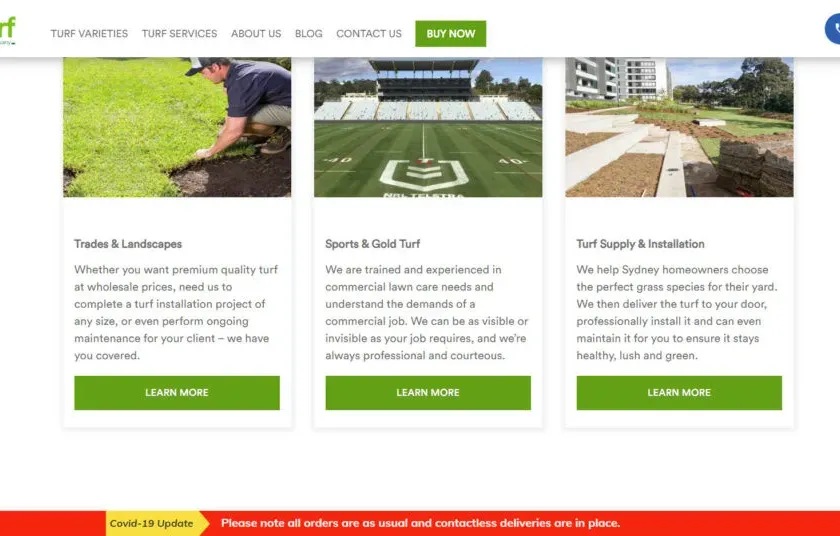
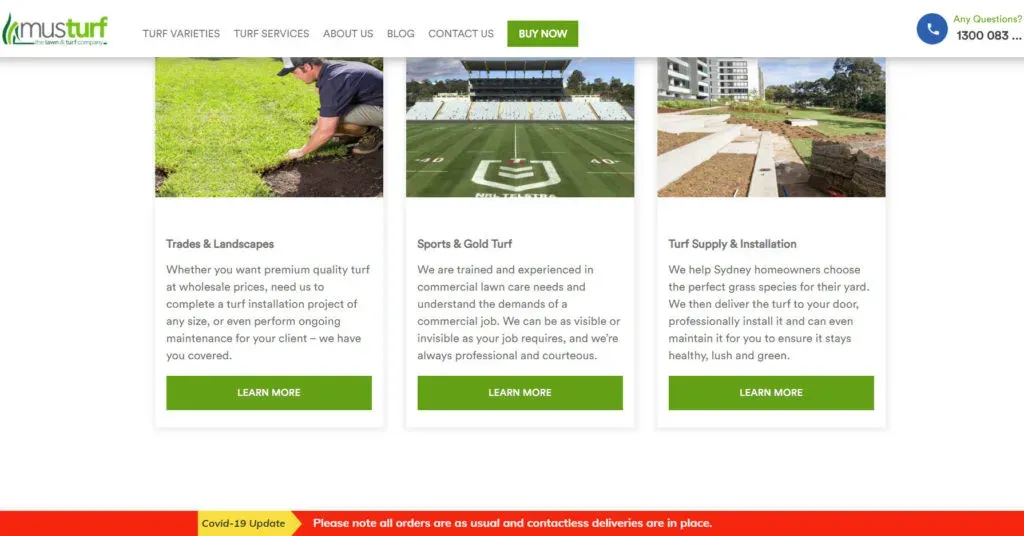
We’ve achieved this mainly in the form of eye catching notification/update bars on the client websites.
For example, the bar below explains the client is taking orders as per usual and providing contactless deliveries:
For some clients, we’ve taken things a little further through the use of conversion rate optimisation split tests to identify which messaging works best.
Here’s an example of a notification bar in use on an ecommerce site:
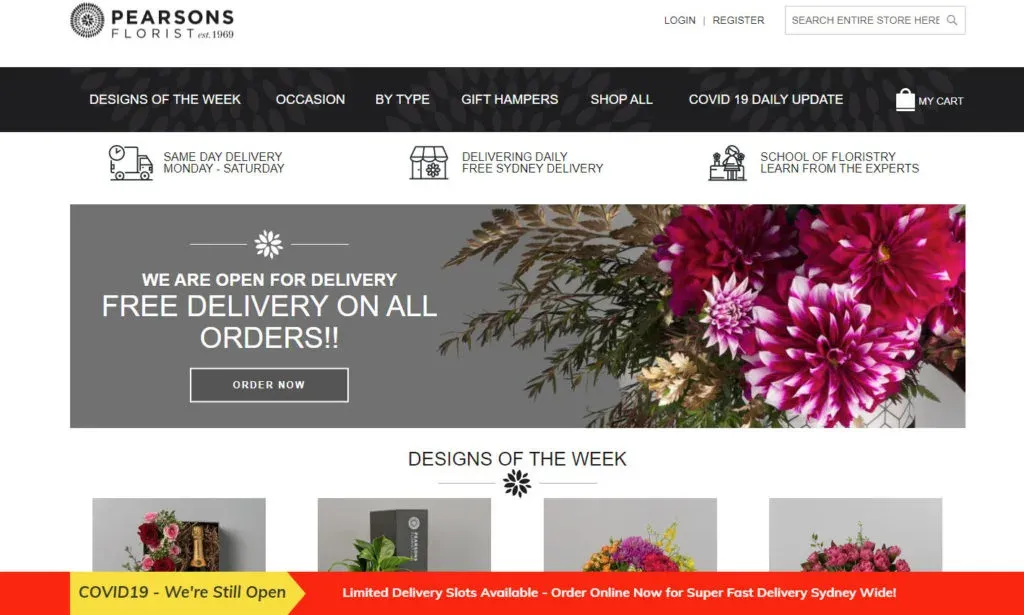
We are showing 50% of the people that visit the site the version above and then 50% of visitors a version with different messaging and design:
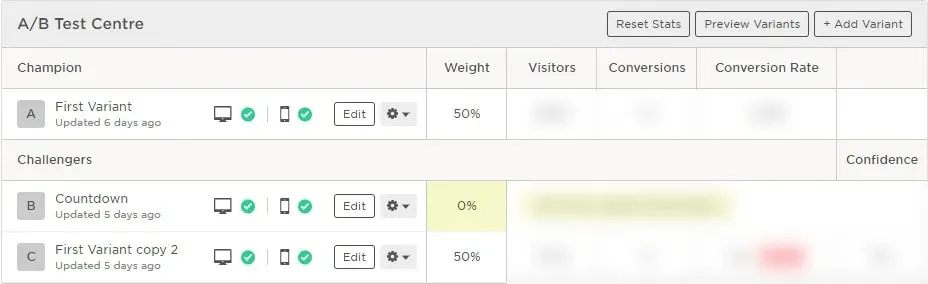
We’re then tracking completed purchases, conversion rate and revenue in Google Analytics to identify which version has the most impact on sales for the client:
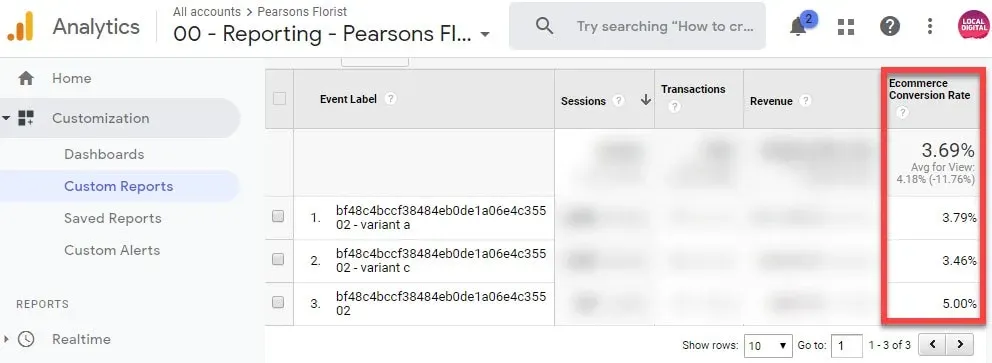
In the screenshot above, there’s one clear leader when it comes to generating more sales at the moment.
The version that wins the test will be kept, we will discard the loser and then create another version to test against the winner.
Keeping that up over the next couple of weeks will help us generate the client as many sales as possible in the coronavirus climate.
Remarketing
If you’ve been running your digital marketing for some time now, you should have a a pretty handy range of remarketing audiences built up.
This is the perfect opportunity to get your message out to previous customers, or at the very least, people that have visited your site or engaged with your content recently.
Below is an example of a really clever video one of our clients in the beauty/personal services space has put together to explain how they are approaching health and safety at the moment.
We’re using this same video asset in remarketing ads to make sure as many people see it as possible:
We’re also using remarketing ourselves.
Last week we published a “food for thought” article with ideas and examples on how different businesses are approaching their marketing.
We’ve been showing remarketing ads for this article on Facebook to people that have engaged with us previously.
The idea behind this approach is that we’re trying to offer value and help as many people as we can right now, and are doing it by showing the article to a targeted list of people that are likely to be interested in it:

SEO - Onsite Optimisation
We had decided to make SEO for our own website more of a focus in 2020. Like most agencies, for many years we’d been busy working on client campaigns and less focused on our own advertising, but with the launch of our new site came a focus on SEO.
One of the main terms an agency like ours would want to rank for is SEO Sydney. It’s also a very competitive keyword - lots of other SEO companies want to rank for it and put effort into it, so it’s a battle!
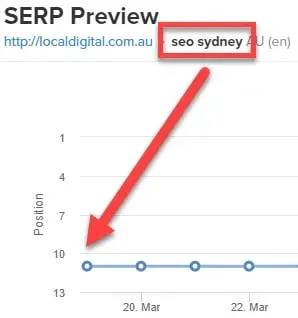
After a couple of months effort with the new website launched, we were ranking about 10th/11th for the keyword prior to the coronavirus pandemic:
With some extra time on our hands lately, our SEO team have spent some time over the past week re-optimising the on-page for our Sydney SEO page.
What does this mean?
Writing new copy, incorporating new keywords and passages of content to give Google what it wants to see.
Our secret weapon?
The Google Cloud Natural Language API.
Google themselves say right there on that page that this API uses the same deep machine learning technology that powers Google Search.
So, if that’s the case, using the machine learning API to analyse our copy and the copy of other websites and then making optimisations should lead to better rankings.
So we did that last week, and the rankings improved:
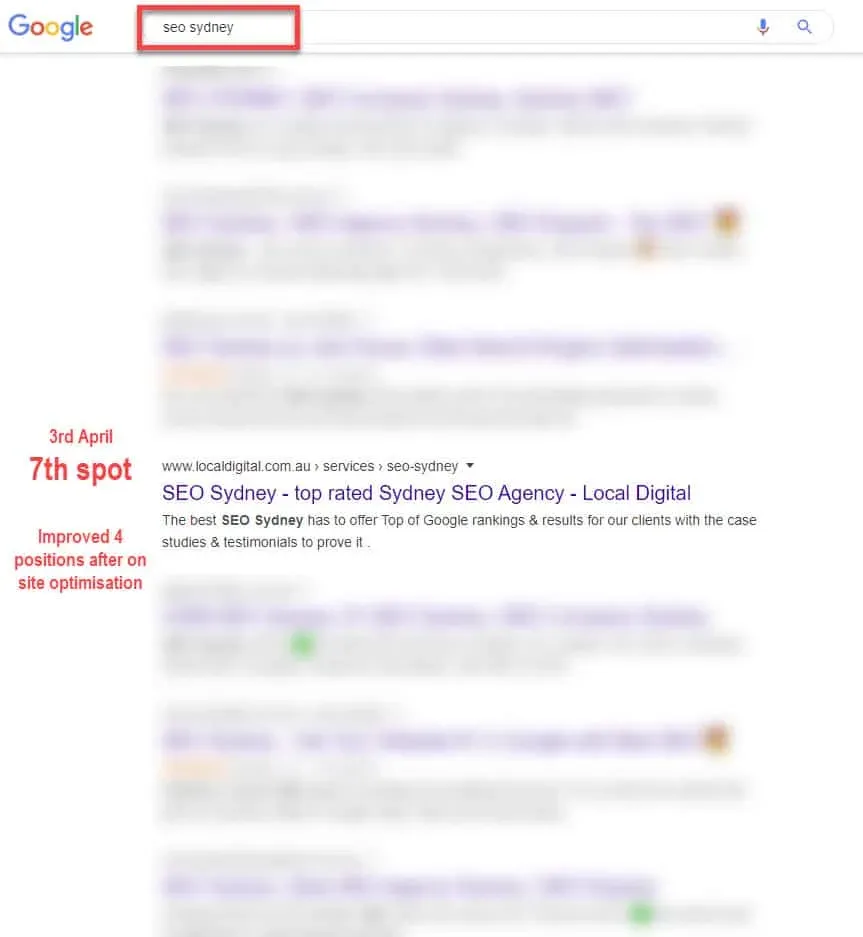
Not a bad result at all.
Moving 4 positions from position 34 to 30 is much easier than moving 4 positions up the first page - the closer to the top you get the harder it tends to be.
So we’re happy with these early results, and will be using the slower pace of these COVID times to continue to improve our SEO across the board.
SEO - Site Speed Optimisation
With work slowing a little at the moment, it doesn’t mean your website has to be slow.
In fact, now is the perfect time to work on improving the speed your site loads. As we covered previously, site load speed is a major Google ranking factor.
We have used the last couple of weeks to dramatically increase the load speed of some client sites.
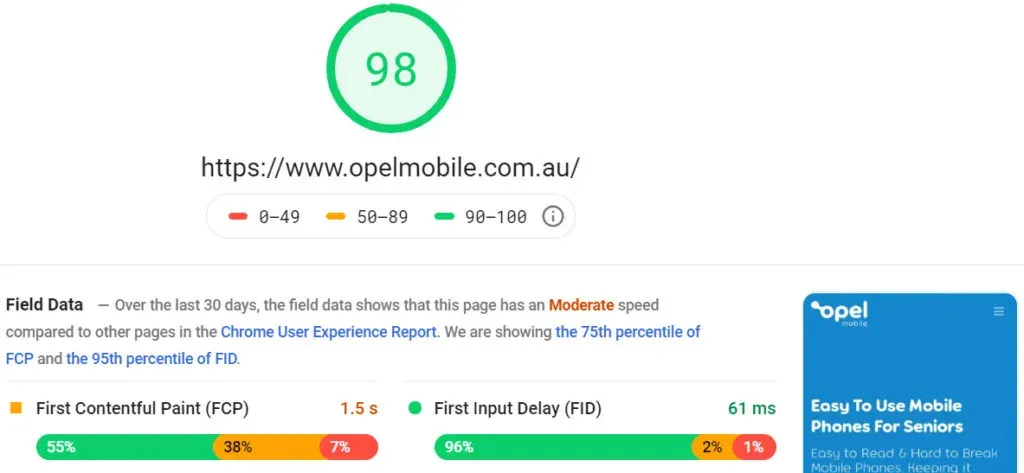
Check out the results of our optimisation work for one of our clients - a dramatic improvement in their mobile speed score:
BEFORE:
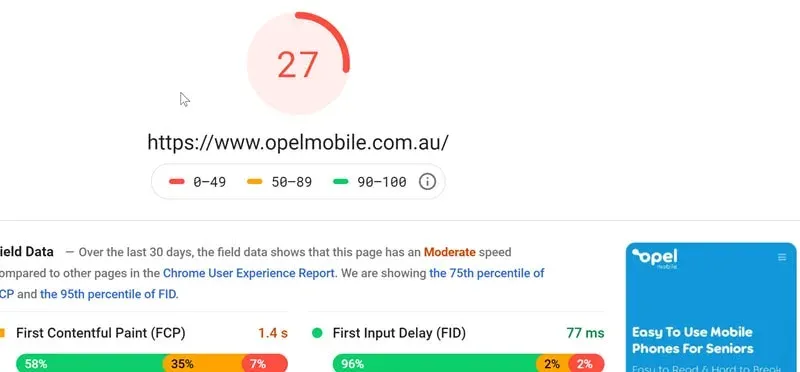
AFTER:
SEO - Link Building
We all know link building is the most important part of SEO, especially link building done the right way.
The right way is not PBNs controlled by an agency or cheap shitty links sold on re-imagined expired domains, rather, links from real websites owned by unique individuals or publishers are the way to go.
The problem with these types of links?
It’s the most expensive way of going about your link building.
There are unavoidable costs, whether that’s paying for content creation, paying website owners to write copy, paying to have infographics designed, it all adds up.
And the kicker is most of the time these costs are in USD. With the Aussie dollar faring poorly at the moment it just means link building is even more expensive.
So this tip is pretty much a straight forward business recommendation.
Negotiate like mad with your suppliers.
Whether that is a content creator or a graphic designer or a software service or basically any other cost you might incur when acquiring links, whatever price they quote, ask for a discount on it.
With client budgets being reduced our team have been negotiating like mad with our own suppliers, it’s just the blunt reality of the environment we’re in at the moment:

By stripping our own costs, we’re able to continue to provide a decent level of service for our clients, even with their own budgets being reduced.
Of course, this isn’t sustainable.
Once things start going back to normal we can’t expect our suppliers to all be discounting (nor would it be fair to expect them to), but at this moment in time it certainly doesn’t hurt to ask.