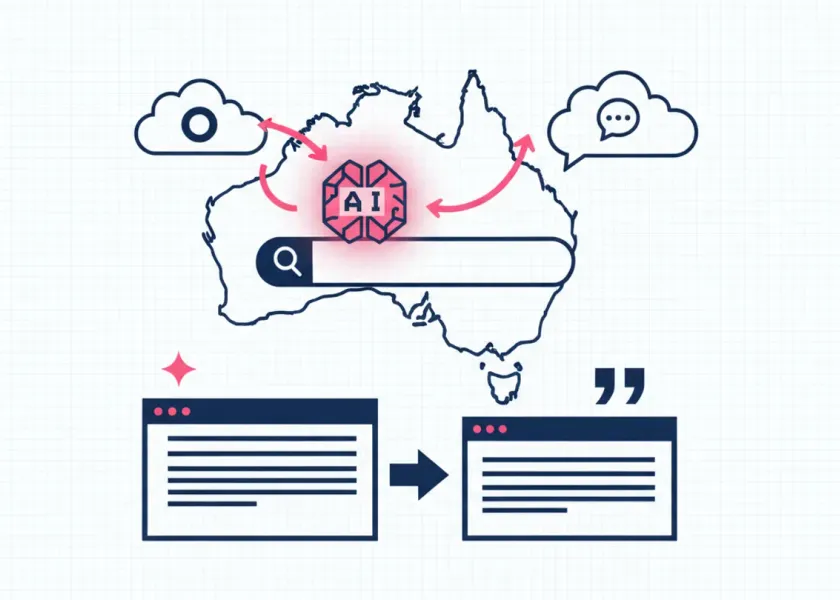
Your customer typed “emergency plumber near Parramatta” into Google. An AI Overview answered before the blue links. Three businesses got named as sources. Yours was not one of them.
Getting cited means the answer quotes or links your business when someone asks about your service and suburb. That is the job for Australian trades, clinics, and multi-location services.
What “getting cited” actually is
Google AI Overviews appear above classic results on some queries. When the Overview quotes your page or links your site, you are a source. The buyer may never click. They still saw your name in the answer.
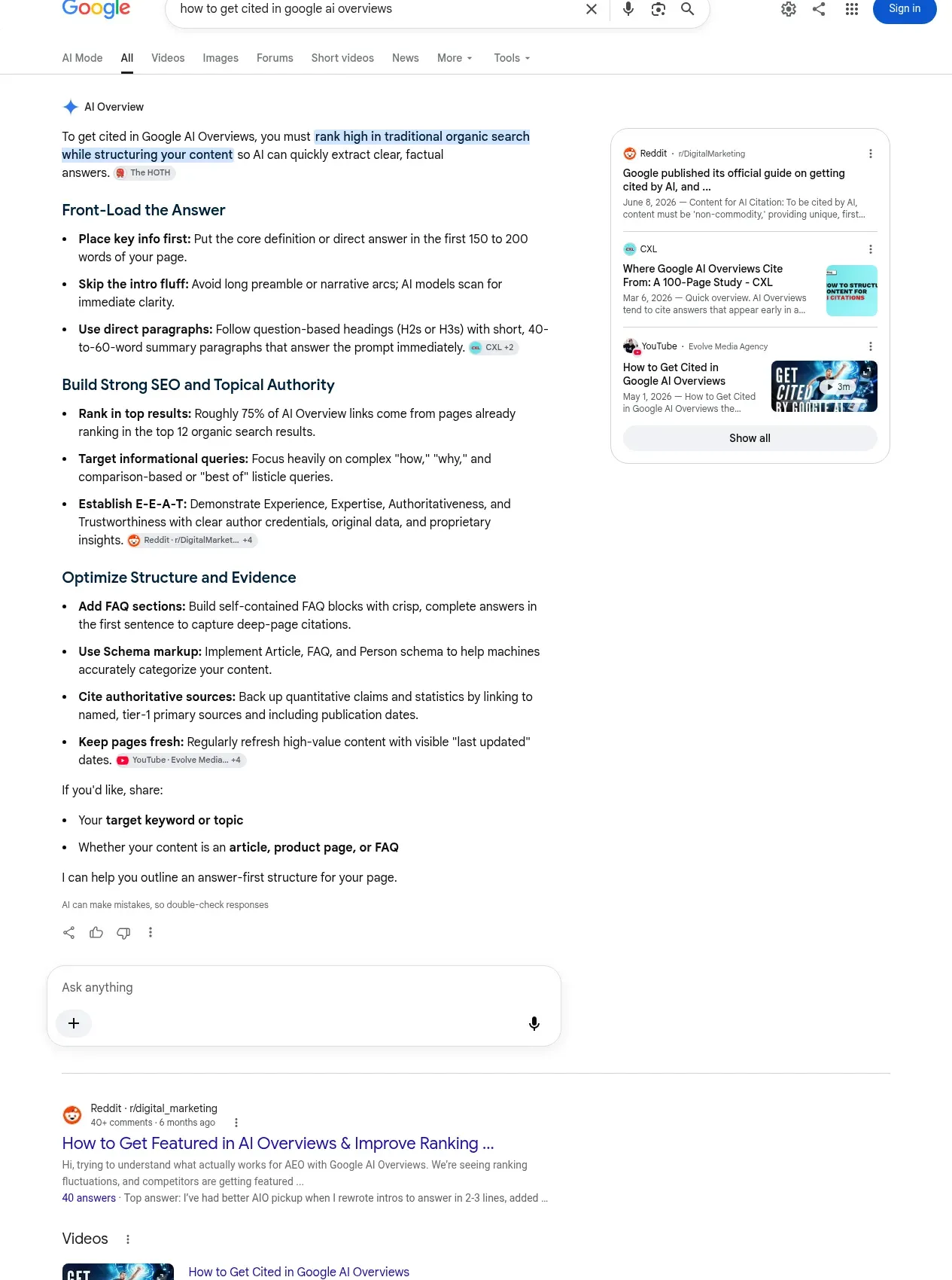
ChatGPT (and similar chat tools) can name or link a publisher when they have clear, attributable material about a brand or topic. The layout differs. The outcome is the same: the answer trusts you enough to mention you.
A citation is a referral from the answer layer, not a ranking report line.
When a Gold Coast homeowner asks who to call for ducted air conditioning, the question for your business is: does that answer know you exist?
Why it matters for AU service businesses
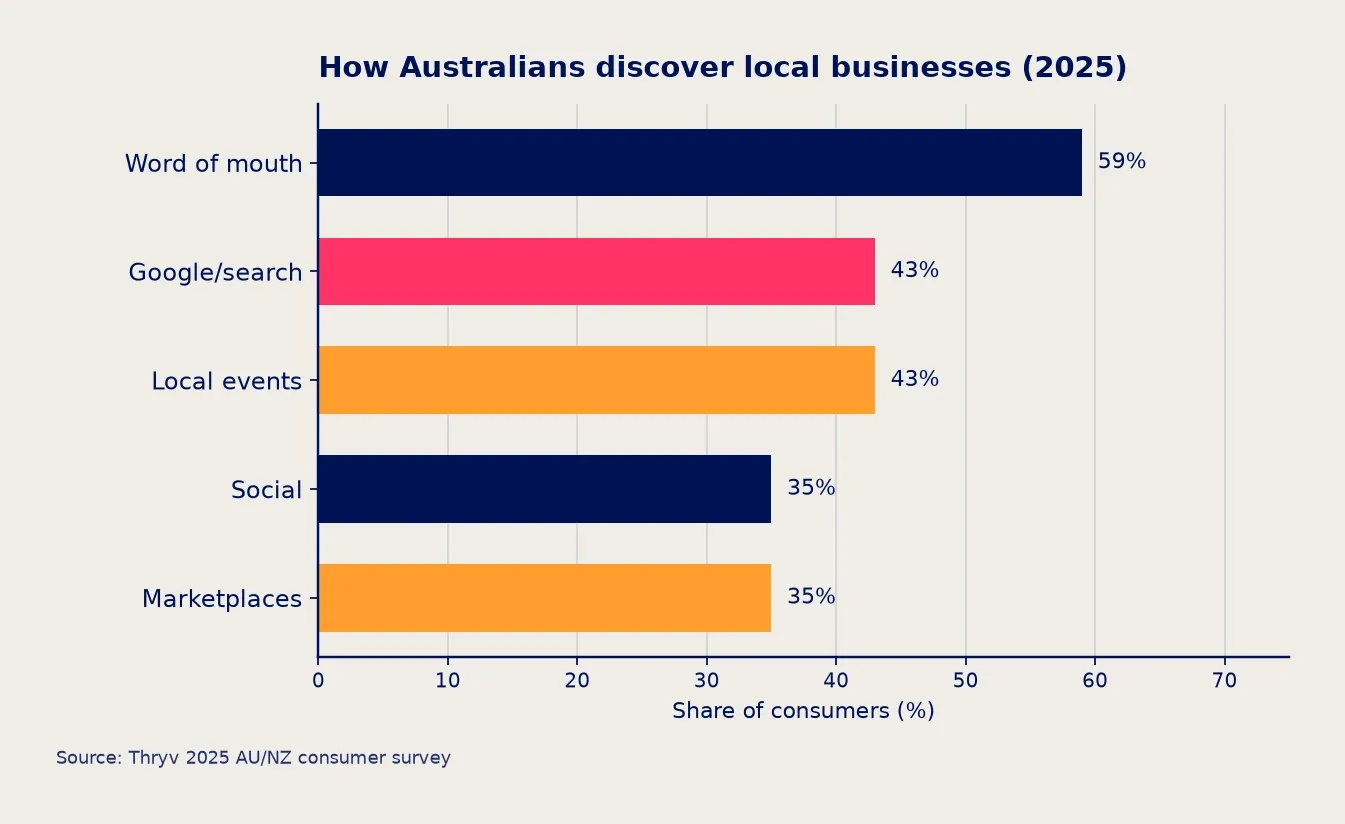
Buyers still discover local businesses through search. Thryv’s 2025 AU consumer survey found 43% discover new small businesses via online searches such as Google, behind word of mouth at 59% (https://www.thryv.com.au/pdfs/guides/2025-AUS-NZ-report-final.pdf).
As of August 2024 the ACCC reported Google still held nearly 94% of Australian general search (Bing 4.7%), with generative AI’s market impact “limited so far” (https://www.accc.gov.au/media-release/googles-dominance-in-general-search-yet-to-be-disrupted). Google Search remains the main door. AI Overviews sit on that door more often than they used to.
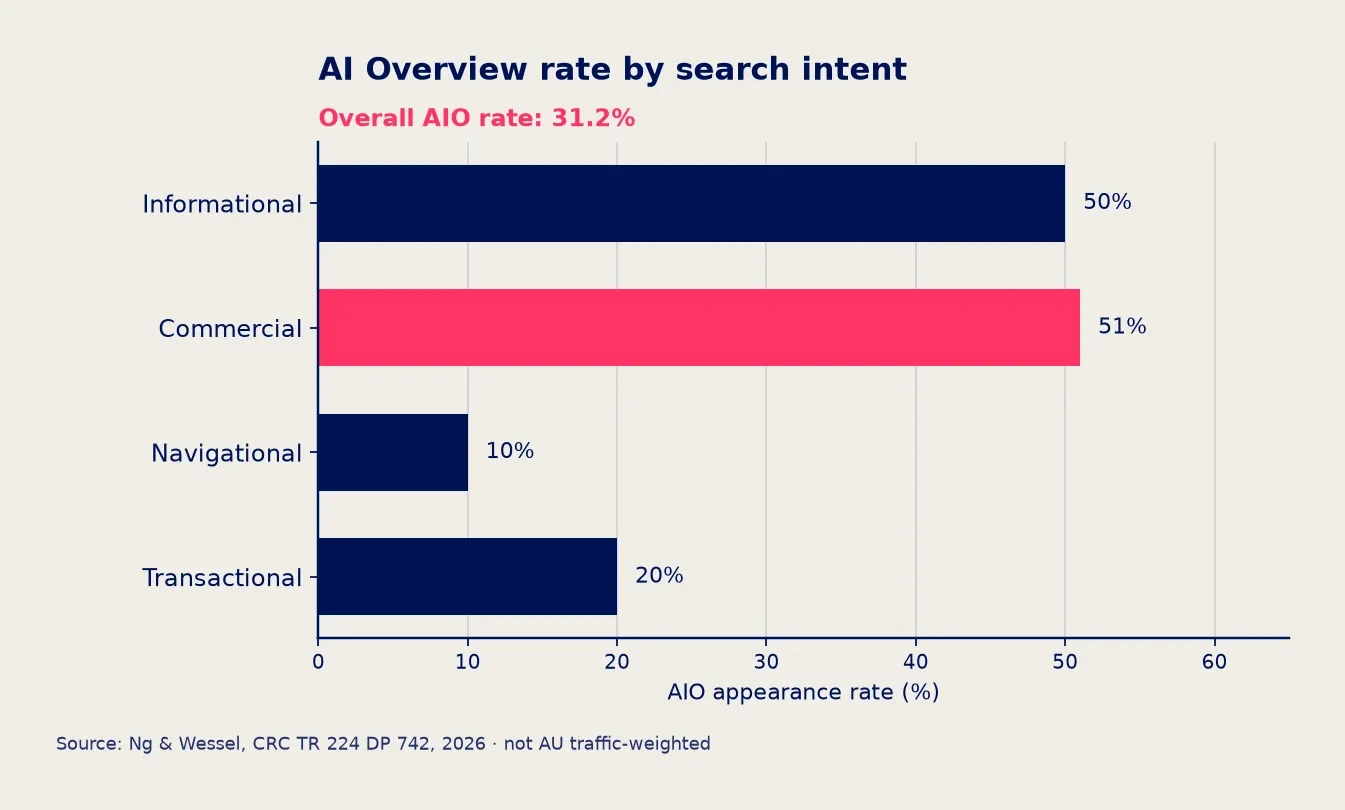
A 2026 CRC TR 224 study of 15,118 Google SERPs found AI Overviews on 31.2% of observations overall, and on about half of commercial and informational queries, but far less often on navigational and transactional ones (Ng and Wessel, DP 742: https://www.crctr224.de/research/discussion-papers/archive/dp742). Flag: sample is intent-balanced, not AU traffic-weighted.
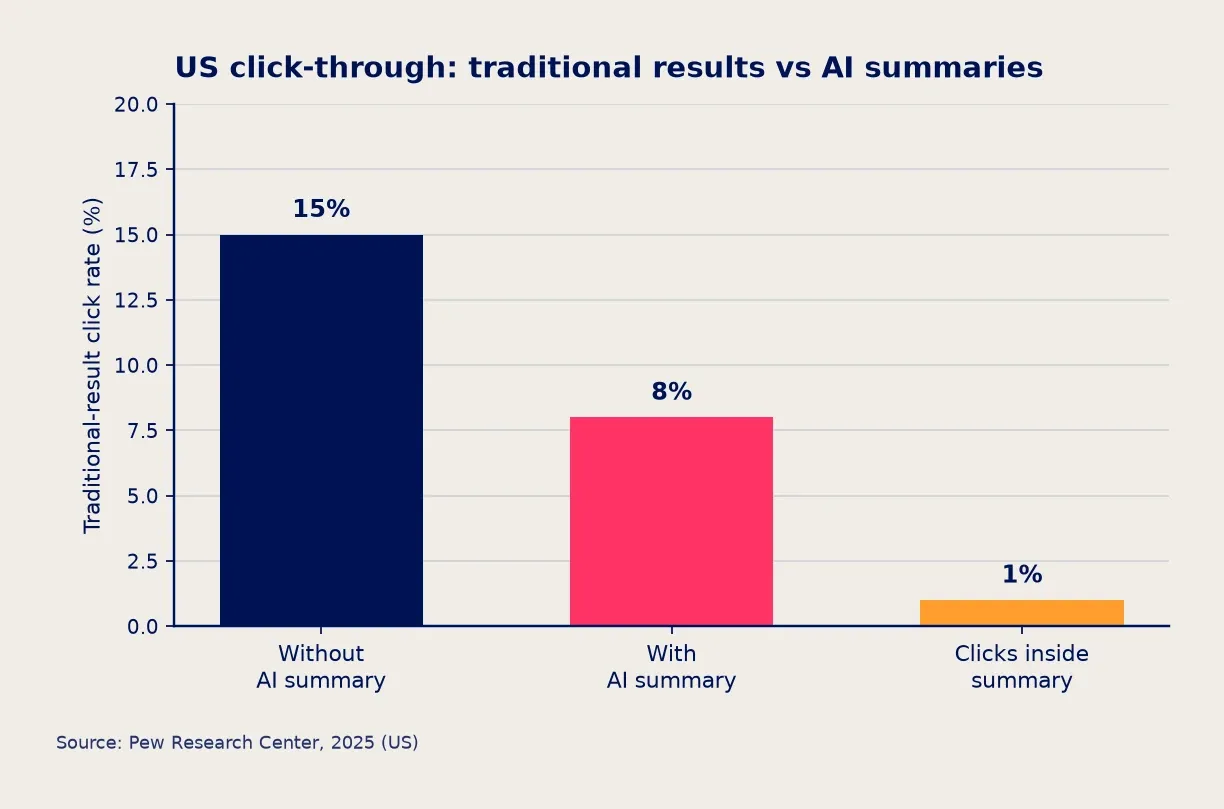
Pew’s 2025 US browsing study found traditional-result clicks fell from 15% of visits without an AI summary to 8% with one, and only 1% of AI-summary visits clicked a cited source link (https://www.pewresearch.org/short-reads/2025/07/22/google-users-are-less-likely-to-click-on-links-when-an-ai-summary-appears-in-the-results/). Recency: March 2025 data; AU enquiries impact not measured.
So: show up in the answer when it appears, keep earning clicks and calls from classic Search, and treat both as one acquisition path.
Most business owners assume “showing up in AI” needs a totally different tactical strategy. In practice it means doing good SEO really well. Plenty of people are incentivised to sell specialty “AI services” and make this sound more exotic than it is. Don’t get sucked into the hype.
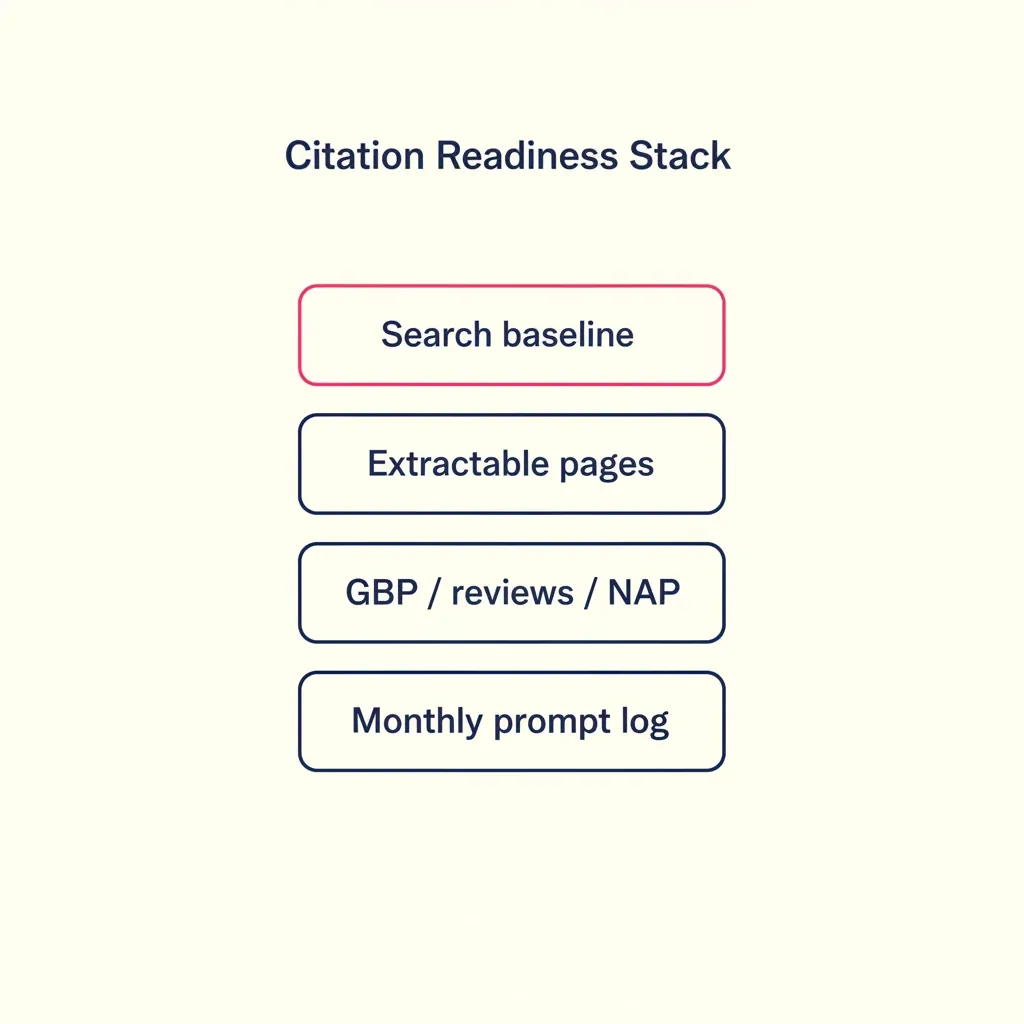
How to get cited (do this in order)
1. Earn the commercial Google Search baseline
AI Overviews need indexed, relevant pages to lift. Pages that never compete for “service + suburb” rarely become sources for those same questions.
Build or fix:
- Service pages and suburb pages that match how buyers search
- Titles and H1s that name the service and the place
- Internal links between hub, services, and locations
- Forms and phone numbers that work on mobile
Live suburb demos and local-intent patterns sit in SEO Show ep 138. Get that foundation right before you spend a month on AI packaging alone.
Before you push AI-citation work, “good enough” Google Search looks like this: you rank well for your brand; site:yourdomain.com.au shows many indexed pages; non-brand searches land on page one; local suburb terms show in Google Maps; and your Google Business Profile is fully filled out, active, with a healthy review count and review velocity. That is the bare minimum because it is what AIs look at when they search.
2. Write pages an answer can lift
Structure beats word count.
- Answer first: two to four plain sentences under the H1 that state the answer
- Question headings: H2s that match buyer questions (“How much does slate roofing cost in Sydney?”)
- Tight sections: one idea each; short paragraphs; real step lists where steps exist
- FAQ blocks: the same facts again in question form
- Entity clarity: one trading name; NAP matching Google Business Profile; suburbs and services named the same way everywhere
- Real freshness: update when prices, areas, or process change
- Useful numbers on the page: verified stats, prices, timelines, or coverage areas a model can quote
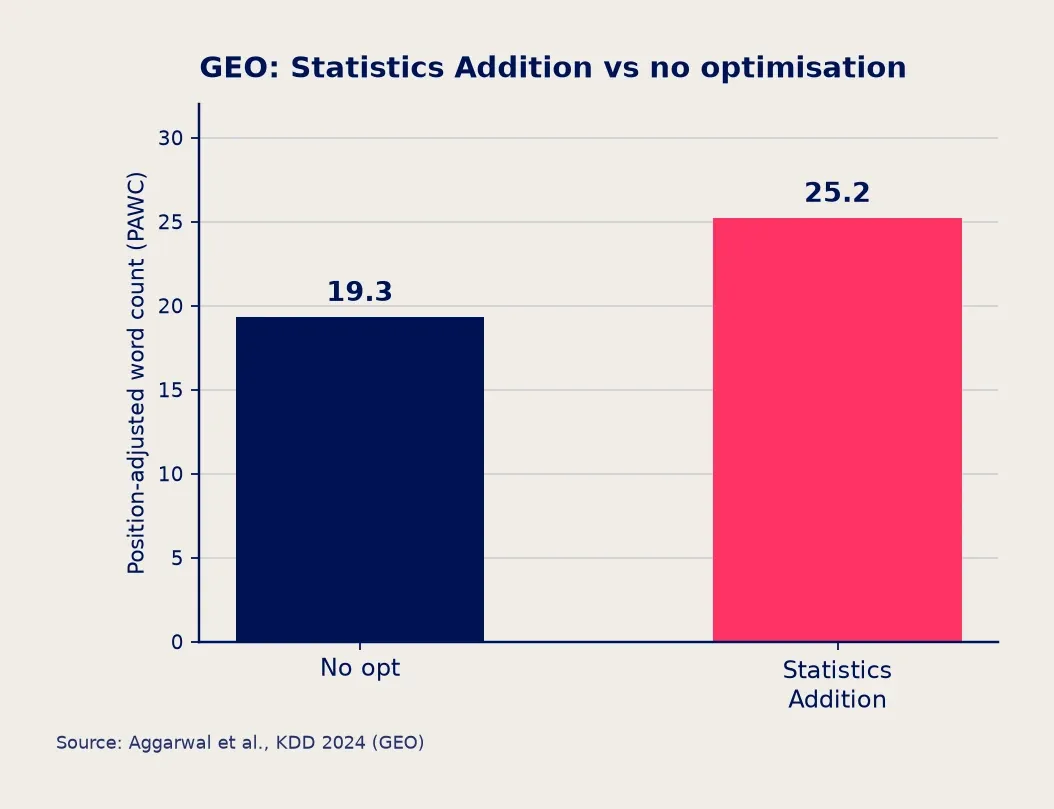
In the 2024 KDD paper GEO: Generative Engine Optimization (Aggarwal et al.), adding statistics lifted Position-Adjusted Word Count from 19.3 (no optimisation) to 25.2, within the paper’s stated 30-40% relative lift band for Cite Sources / Quotation Addition / Statistics Addition; on Perplexity.ai the best methods reached up to 22% and 37% on the two metrics (https://arxiv.org/pdf/2311.09735).
Schema (FAQ, HowTo, LocalBusiness) labels the page for clarity.
Thin competitors usually fail here for boring reasons: weak authority and few citations across the web that prove they are a real business, poorly optimised Google Business Profiles, and missing non-brand organic rankings. Fix those gaps on your own site before you chase exotic AI tactics.
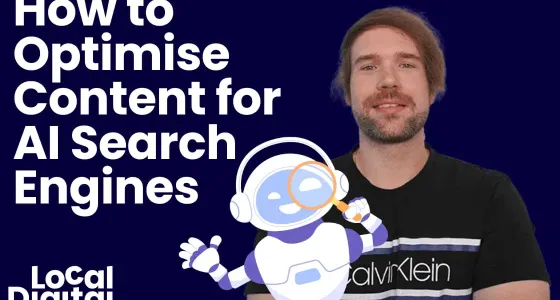
For deeper extractability patterns, see How to Optimise Content for AI Search Engines. For definitions, see What is AI SEO?.
3. Make the local trust stack consistent (GBP, reviews, NAP)
Local service answers lean on the same signals Google Maps and Google Search already reward.
On SEO Show ep 137 (Showing In A.I For A Typical Local Service Business), Michael and Arthur cover what helps a typical local business show in AI: community proof, reviews, and local substance over nameless generic posts.
Do this stack:
- Google Business Profile accurate (categories, service areas, hours)
- Reviews that mention suburbs and services (“fixed our ducted system in Broadbeach”)
- NAP consistency across the site and directories (ep 126 on brand consistency)
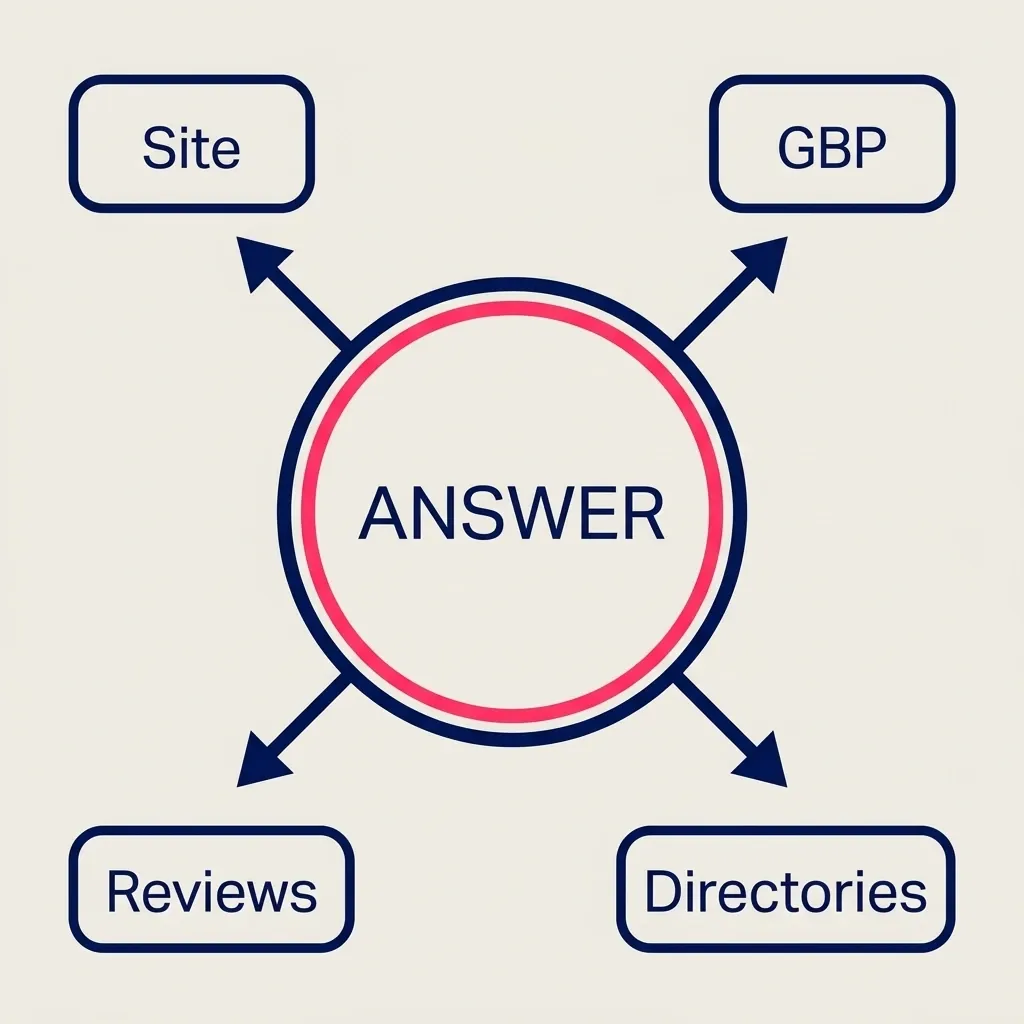
- Mentions elsewhere a crawler can attribute to the same entity
Check once: Google your exact trading name + phone. Every result (site footer, GBP, Facebook, directories) should show the same name, phone, and address. Fix mismatches before you publish new AI-facing pages.
What moves the needle on reviews: a system to ask for reviews and ask customers to mention the services and suburbs in the review text. Generic five-star blurbs help less than “fixed our ducted system in Broadbeach.”
4. Get ChatGPT to name you (concrete checks)
Use the same citeable pages and entity work. Then run these checks:
- Put a named human author on expert pages (real name, role, short bio).
- State service + suburb + process in plain sentences (hours, areas served, what happens after the enquiry).
- Keep the trading name identical to your Google Business Profile and homepage.
- Once a month, open ChatGPT in a clean session and ask your buyer prompts (“best slate roofing Sydney”, “emergency plumber Parramatta”).
- If you are named or linked, screenshot and log date + prompt. If a competitor is named, open their page and note what they stated that you left vague.
Skip anyone selling “guaranteed ChatGPT citations” with no measurement plan.
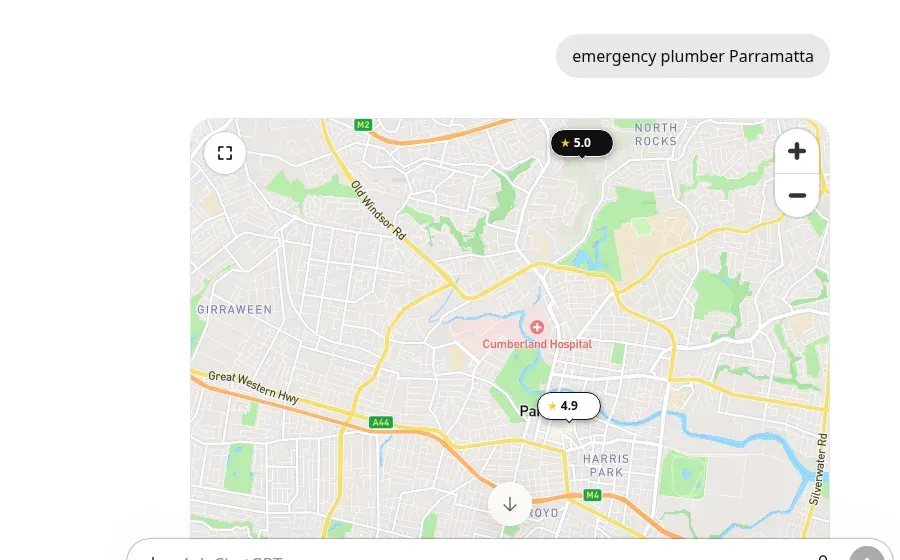
Early experiments that tried to “seed” AI tools by chatting about a business or getting the model to “read” a page do not work for most local service businesses. The models are not trained on you. They search the web quickly (query fan-out across multiple searches) and amalgamate what they find into recommendations. You need to be findable when they search. You will not influence model training unless you are a massive brand. For about 95% of businesses, that path is closed.
5. Measure citations without five SaaS seats
- List 10 to 20 prompts buyers actually ask (service + suburb + best / near me / cost / vs).
- Run them in Google (note any AI Overview) and in ChatGPT on a clean session.
- Screenshot when you are named or linked. Log date, prompt, surface.
- Keep that log beside calls and form fills. Each month, mark which prompts produced a citation and which produced an enquiry the same week. If a prompt cites you but never leads, fix the page CTA and phone/form path. If a prompt leads but never cites you, strengthen answer-first copy and entity clarity on that URL.
Re-run the full prompt list monthly. When a competitor appears in the answer and you stay invisible, compare their entity clarity, answer-first structure, and review proof to yours.
What to skip this month
- Turning every blog post into robotic FAQ sludge
- Buying “AI SEO packages” that are just links with new branding
- Chasing definitional head terms while your money sits in service + suburb demand
- Claiming a citation without a screenshot and a date
- Specialty AI tactics sold as something separate from good SEO (see the hype warning above)
Related reading
- AI Answers (category hub)
- What is AI SEO?
- How to Optimise Content for AI Search Engines
- AI visibility (service page)
What to do this week
- Write your list of 10 to 20 buyer prompts (service + suburb).
- Run each in Google and ChatGPT. Screenshot any time you are named. Log date, prompt, surface next to calls and forms.
- Fix one entity gap: NAP mismatches, incomplete GBP fields, or reviews that never mention suburbs/services.
- Pick one money page and rewrite the open to answer-first, with a short FAQ underneath.
- Skip specialty “AI SEO” packages this month. Spend the time on indexed pages, Maps visibility, and review velocity instead.
You will know it is working when the same prompts start naming you in the answer and your call/form log still moves. If citations appear with no enquiries, fix the CTA and phone path on that URL. If enquiries appear with no citations, strengthen answer-first copy and entity clarity on the pages those prompts should lift.